A Checklist for Attending Your First Local Procession
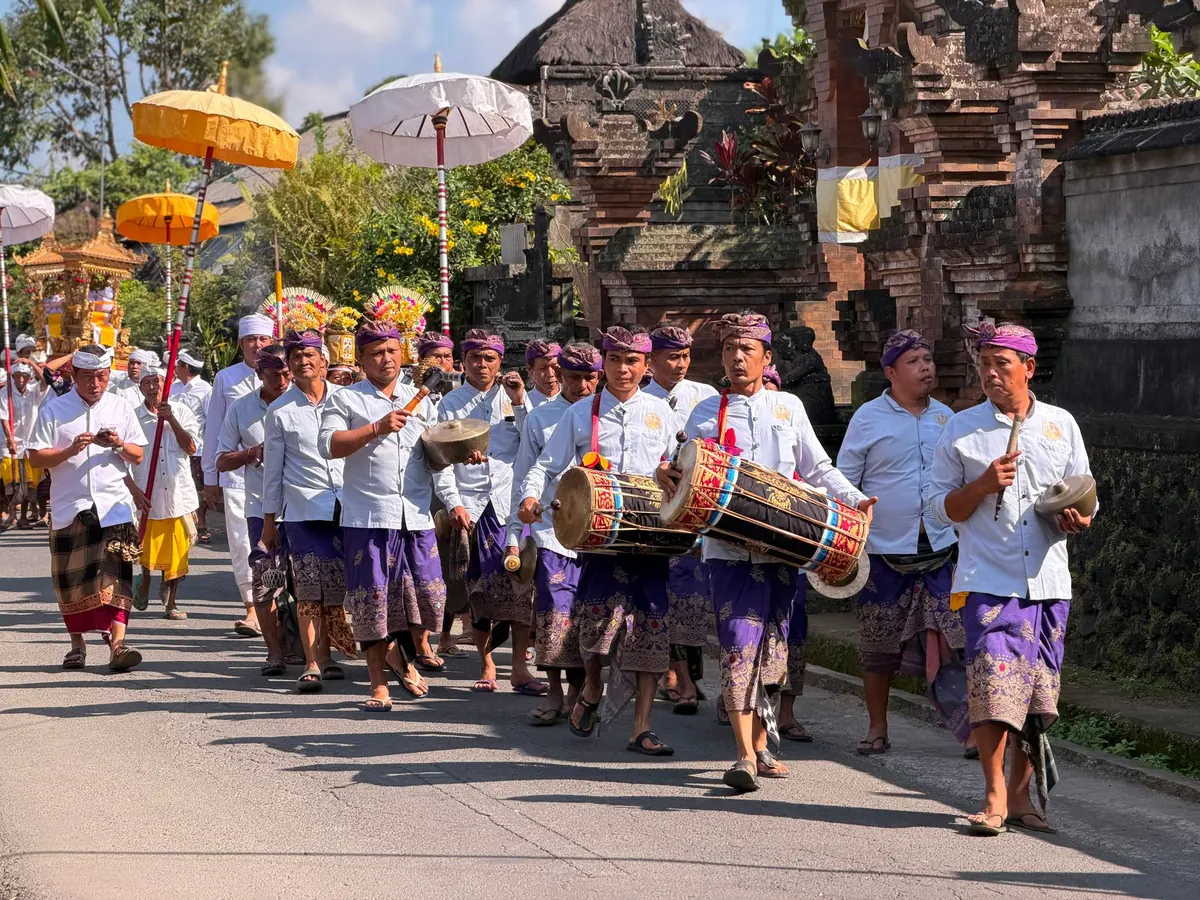
Every procession announces itself twice. The first announcement is written: a photocopied programme taped inside the door of the parish church, a printed sheet in the bar, a line of text on a noticeboard that nobody under thirty reads. The second announcement is sound. A snare drum tuning up two streets away, a horn testing three notes, the low murmur of a hundred people gathering on cobbles. If you catch only the second one, you will still see something. If you prepare for the first, you will understand what you are seeing.
Find the Route, Not Just the Starting Point
The route matters more than the timetable. Ask for the programme — the parish, the bar nearest the church, or the shop that sells candles will usually have one, and someone behind the counter will happily explain it. Read the small print: processions often include stops that never appear in the main description, a house where an elderly resident is too ill to come out, a corner where a prayer is said for the dead of the year, a chapel that gets a single verse and a moment of silence.
If you have an afternoon free, walk the route in daylight. Look for the narrow alleys where a statue on shoulders will barely fit, the balconies people will lean from, the stretch of unlit street where the candles will do all the work. Then choose two or three vantage points instead of trying to follow the whole thing. Following means seeing the backs of heads for two hours; standing still means seeing the procession arrive, pass and disappear, which is what you actually came for.
Timing: Why Eight O'Clock Means Twenty Past
Printed times are the time the procession is meant to leave, not the time it does. Departure waits for the band to finish assembling, for the last members of the confraternity to arrive in their robes, for the statue to be fastened safely to its platform, for the priest to finish. This is not disorganisation. It is the rhythm of something that has happened every year for longer than anyone can remember, and it will not be hurried by a printed sheet.
Arrive twenty or thirty minutes early anyway, and stand near the church door rather than down the street. The departure is the part people forget to describe: the door opening, the sudden hush, the band starting up on a signal nobody else hears, the shuffle as the crowd finds its order. Then stay for the return — the rientro — if you can. It is later, colder, far less crowded, and considerably more interesting. The band plays differently when it is tired, the talk is louder, and people who have been solemn all evening start greeting each other like neighbours again.
What to Wear, and What Not To
Dress for three things at once: a church, a cobbled street, and a long wait.
Shoes and layers
Wear shoes you can stand in for two hours on uneven stone. Wax drips, so avoid anything you would mourn. Take a layer you can remove: evenings in a narrow street are warm until they are suddenly not.
Inside the church
Cover your shoulders if you are going in, and keep voices low. Men take hats off indoors. If a Mass precedes the procession, do not stand in the doorway chatting through it — wait outside at the edge of the square.
Colour and costume
Dark, plain clothes are the safe choice, though nobody will mind a linen shirt. Do not wear the colours or robes of the confraternity carrying the statue; those belong to people who have earned them, sometimes over decades. Unless the occasion is explicitly penitential, you do not need black.
Behaving in a Crowd That Has Done This Before
The crowd is not an audience and not an obstacle. It is a loose, temporary organisation with rules nobody will explain to you, which makes the following worth memorising:
- Never cross the line of the procession, and especially never in front of the statue. Wait. It takes ninety seconds and it is the single thing that marks you as a visitor.
- Step back to photograph. Do not walk backwards into the men and women carrying the platform, and turn the flash off. Their arms are busy and their view is blocked.
- Keep the church door and the first metres of the route clear. That space is for the procession to form, and for the people who need to reach it.
- Go quiet when it goes quiet. When the band stops and a prayer begins, conversations end mid-sentence. Follow that.
- Do not touch the statue unless you see others doing it. In some places it is customary; in others it is not done, and you will not be told which.
- Watch your pockets where the crowd is thickest. Standard advice for any dense gathering, and it holds here.
Children on shoulders belong at the back. Phone calls belong nowhere. If you are offered a candle, take it.
The Quiet Moments Most Observers Miss
The procession has a shape, and its best parts are not the loud ones. Watch for the pause at a corner where the band falls silent and the only sound is a priest's voice and the shuffle of feet. Watch the man relighting a candle that keeps going out, cupping it with his hand as if carrying water.
Listen for the stop at a shuttered house. The procession halts, the band does not play, a short verse is sung, and then it moves on. Nobody announces why. Someone inside is ill, or has died, or cannot come out this year.
Then there is the end. The statue turns back towards the church door, the carriers lift it one last time, and the applause — if there is applause — stops rather abruptly, because the thing is over and people are tired. The street empties in minutes. A woman comes out with a brush to sweep up the wax. Two men fold a banner. This is the part that tells you what the procession actually is: not a performance, but a piece of housekeeping that a community does for itself, once a year, in public.
Small Courtesies That Make You a Guest Rather Than a Spectator
Buy something at the bar before you take up a position outside it. Ask before photographing faces close up, and accept a no without negotiating. Learn one greeting and use it — a simple good evening, offered to the person beside you, goes a long way. If a shopkeeper is watching the procession from their own doorway, do not stand in it; edges are shared, thresholds are not. And if you must leave early, leave from the back, quietly, without pushing forward for one last picture.
A Last Checklist Before You Set Out
- Get the printed programme and read the full route, including the stops.
- Arrive thirty minutes before the stated time and position yourself near the church.
- Wear standable shoes, a removable layer, and covered shoulders.
- Keep the procession's path clear, your flash off and your voice down.
- Stay for the return, then stay two minutes longer than you want to.
Do those five things and you will not merely have watched a local procession. You will have been, for an evening, in the same room as one.
Photo: sasif awan / Pexels