How to Find the Story Behind a Local Shopfront
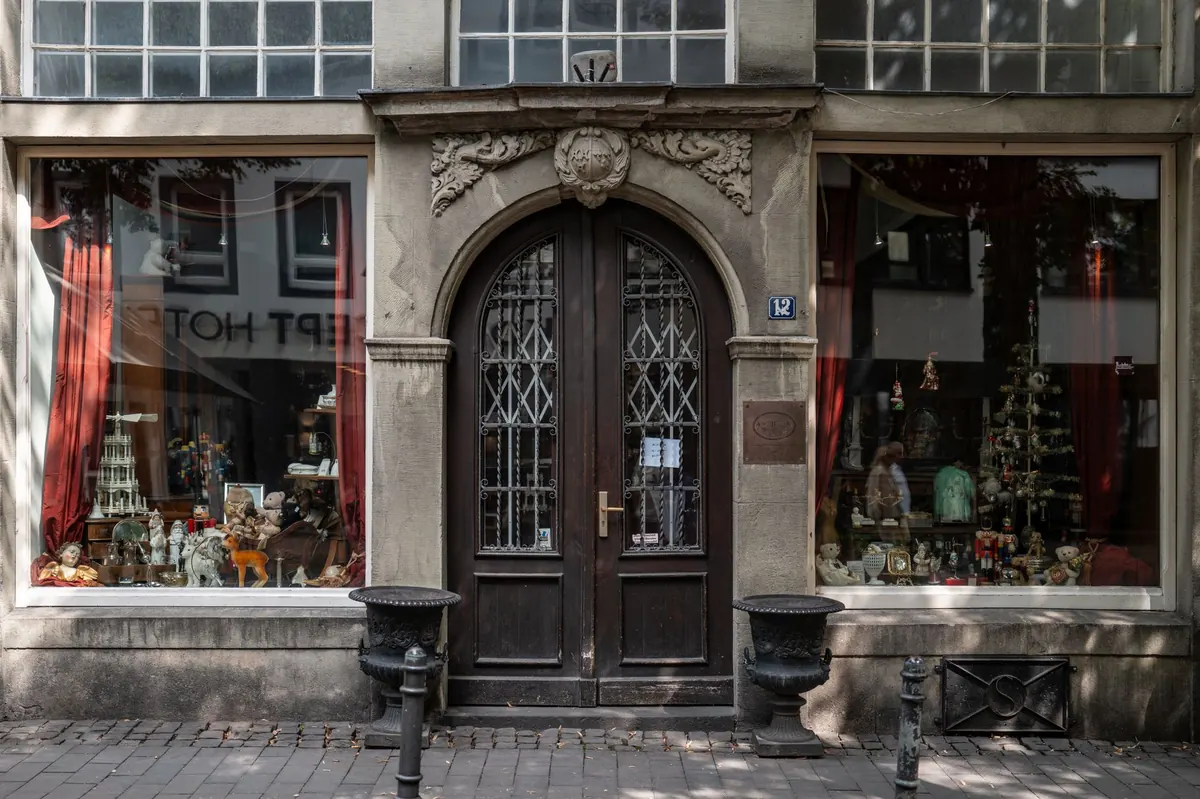
The shutter comes down at seven and the street goes quiet, but the shopfront stays. Look closely and you will find layers: a painted name half-sanded away, a bracket hole where a different sign used to hang, a stone step worn into a shallow curve by a hundred years of feet. Each mark is a rough date, and each date belongs to somebody who once counted the takings before closing. Tracing a shop's former lives is not difficult. It is slow, sociable work, and most of it happens on the pavement with a notebook in one hand.
Read the building before you read the sign
Start with the fabric, not the story. Stand across the street and look at the shopfront as a piece of construction. A deep stone threshold, a marble sill, a heavy wooden door frame set back from the pavement: these usually point to an older build, often a time when the ground floor was a workshop with living quarters above. Aluminium window frames bolted onto older timber, a roll-down shutter with a modern cassette, a rectangle of fresher plaster where something was fixed, all suggest later alterations, sometimes decades apart.
Note the height of the fascia, the band above the window where the name is painted. Older fascias are often taller and narrower than the ones added in the second half of the twentieth century, when wider glass and shallower signs became the fashion. Look at the pavement too. A hollow worn in front of the door tells you where people stood; a second hollow a metre to the left might mean the door was once in a different place.
Photograph all of it in flat, overcast light, which shows texture better than sunshine. Take one wide shot of the whole front, then details: hinges, a maker's stamp on a shutter, the house number, the edge where new plaster meets old. Write down what you cannot photograph, such as the smell of a cellar or the sound the door makes.
The lettering is the loudest witness
Old signs survive more often than people expect. Paint fades into the plaster and gets covered, then a later coat flakes and the earlier name surfaces again, faint but legible at a low angle. Walk past in the late afternoon when the light rakes across the wall, and photograph from both sides.
Words that date themselves
Transcribe everything, including the fragments you cannot place. Certain words carry a period with them: drogheria, mesticheria, spaccio, premiata, sali e tabacchi, the old formula generi di monopolio. A telephone number with four or five digits, or one with a named exchange, is a strong hint. So is the title of the proprietor painted underneath the trade: di followed by a surname tells you who held the licence, and that name is your first thread to pull.
Look for more than one layer
Signs were often repainted rather than replaced, and the shapes are still there: a palimpsest of a name in a different typeface, a shop number painted over, an arrow pointing to a side entrance that no longer exists. Sketch the façade and mark every ghost on it, even the ones that look like nothing. Later, when a photograph turns up, those marks will make sense.
Photographs give you a second opinion
One old picture can undo a week of guessing. Local photographic archives, the history room of the town library, parish collections, the albums of a family that lived above the shop, postcards printed for visitors, the background of a wedding photograph taken in the street: all of these show shopfronts nobody thought to record on purpose.
When you find one, compare it point by point with the building in front of you. Where was the door? Where was the counter, judging by the queue outside? What does the fascia say, and in what lettering? Note the house numbers, because numbering changes, and a number that now belongs to a doorway three buildings along can send you confidently in the wrong direction. Ask permission before scanning, and label each file with the date, the source and the name of the person who lent it. In five years you will not remember which cousin produced which photograph.
Conversations, and how to have them
The best source is usually standing at a bus stop. People who have lived on the same street for fifty years carry an archive in their heads, though it is organised by event rather than by date. Ask about things, not years. "What did they sell?" and "Where did the counter stand?" open doors; "Do you remember the Rossi family?" closes them, because a wrong name invites a polite no.
Good people to ask, roughly in order of usefulness:
- The newsagent, the barber and the pharmacist, who see everyone and remember who owned what.
- Neighbours who live directly opposite, since they have looked at the façade for decades.
- The postman or the delivery driver on the same round, who know which door belongs to which family.
- The parish, which often keeps records of local households and businesses in its bulletins.
- The market traders, who supplied the shop and remember what it ordered.
Take notes as you talk, and read them back at the end so the person can correct you. Expect contradictions. Two neighbours naming the same shopkeeper differently is not a problem; it is information, usually about a nickname, a marriage or a change of licence. Record who said what, and never smooth over a disagreement just to make the story tidy.
Turn the pieces into a timeline
Put everything on one page and the gaps become visible. A simple order works well:
- Describe the building as it stands, with photographs and measurements.
- List every word you have transcribed, with the place you found it.
- Pin your earliest dated photograph, then the next, and note what changed between them.
- Add each name you have collected, with its source and the rough period it belongs to.
- Mark the empty decades in a different colour. Those are your next questions.
When memory runs out, follow the paper
Ask the librarian first; local history collections are usually well indexed and the staff know the gaps. Old telephone directories and trade almanacs are surprisingly effective for placing a business in a decade. The town hall may hold cadastral maps and change-of-use records, and newspapers on microfilm will carry opening notices, auction announcements and small advertisements that name an owner. Some of this requires an appointment or a small fee, so ring ahead and explain what you are looking for. If a family history involves debt, illness or a death, be careful with what you publish and ask the descendants before you put a name in print.
An afternoon's method
You do not need a research grant. Give yourself two hours: forty minutes photographing and sketching the façade, twenty minutes transcribing every mark you can see, an hour talking to whoever is out on the street. Then write a single paragraph describing the shop as it would have looked to someone standing there in your earliest photograph. That paragraph is your anchor, and everything you learn afterwards either fits it or corrects it.
Keep the notebook. Go back in winter, when the leaves are gone and the light is low, and look again at the wall you thought you knew. The story behind a shopfront is rarely hidden. It is simply written in a language of brackets, plaster and handwriting that nobody has bothered to read aloud for sixty years.
Photo: Ar kay / Pexels