Local Dialect for Beginners: Words You'll Hear in the Square

The first morning you sit down in the square with a coffee, the language around you will not sound much like the Italian you studied. It will be faster, flatter in places, more sing-song in others, and salted with short words that no textbook gave you: uè, boh, vabbè, daje. None of them are hard to learn. The difficulty is knowing which ones belong to you yet.
Dialect in Italy is not a costume you put on. It is a set of keys, and each key opens a different door. Some open easily — a greeting, a thank-you, a shrug of sympathy at the weather. Others are cut for people who have lived on the same street for forty years. This guide covers the words you will hear most often in the square, what they actually mean in context, and how to use a small number of them without sounding like you are performing.
Start with the sounds, not the vocabulary
Before you memorise anything, listen to the music of the sentence. Italian dialect is carried as much by rhythm as by words. Doubled consonants get held longer than you expect: vabbè has a real pause in the middle, not a quick b. Vowels at the end of words often get swallowed, so buongiorno becomes something closer to bongiorno, and in the south a final -o can slide toward -u.
You do not need to reproduce this. Trying too hard at pronunciation reads as mockery, even when it isn't meant that way. Aim for clear, slightly neutral Italian and let your ear absorb the local shape over months. People will understand you. They will also hear immediately that you are not from here, which is completely fine and saves everyone a small awkwardness.
Six words you'll hear before your coffee arrives
These turn up in squares across most of Italy, with local variations in pronunciation and intensity. Learn to recognise them first; use only the first two or three in your own speech at the beginning.
- Uè — a hail, roughly "hey you" without the aggression. It travels across a square, between friends, when one of you has both hands full. Do not use it with a stranger or a shopkeeper.
- Boh — "no idea," delivered with a shrug and raised eyebrows. Perfectly polite among acquaintances. Overused, it starts to sound like you are brushing the person off, so keep it for things that genuinely don't matter.
- Magari — literally "maybe," but usually meaning "if only." Asked whether you'll make it to the festival, magari is a warm, hopeful no. It is also the politest way in the language to decline something without saying the word.
- Mica — a softener for negatives. Mica male means "not bad at all." Mica lo sapevo means "I had no idea." It takes the edge off a contradiction so it lands as conversation rather than argument.
- Vabbè — short for va bene, but it rarely means "all right." Most of the time it is a small surrender: oh well, never mind, let's not fight about it. Listen for the sigh that comes before it.
- Daje — Roman, and now heard well beyond Rome. Come on. Go on. Well done. It works as encouragement at a football match and as congratulations for remembering your keys.
Two more worth filing away. Ocio, in the Veneto, means "watch out" — short, sharp, useful when a scooter comes round the corner. And Maronna, in the south, is an exclamation of surprise or dismay. It is mild as these things go, but it is still an invocation, and it sounds strange in a foreign accent until you have heard it a hundred times.
The greeting economy of the square
Italians sort greetings by time of day and by how well they know you, and getting this right matters more than any single dialect word. Buongiorno holds until early afternoon; buonasera takes over after that. Salve is the neutral middle ground, useful when you are not sure whether to be formal. Ciao is for people you would address with tu — friends, children, your barista once you are a regular, which may take a while.
Watch how people leave, too. Ci vediamo is "see you," and it is a real intention. Ci sentiamo is "we'll be in touch," and it is looser. A dopo means later today; a domani means tomorrow; ci vediamo in giro means you'll cross paths eventually, which is a promise the square more or less keeps on its own.
The offer that isn't a plan
When someone says passa a trovarci — come by and see us — it is genuine hospitality, not a scheduled appointment. The correct response is warm and vague: volentieri, with pleasure. Turning it into a concrete date on the spot can feel pushy; never showing up can feel cold. The middle path is to go, once, unannounced, on a Sunday morning, and stay for ten minutes.
Reading a no without hearing the word
Refusals in the square are usually soft, and visitors miss them because they are waiting for a plain no. Listen for these instead:
- Magari — I would love to, but no.
- Vediamo — we'll see, which generally means we won't.
- Se riesco — if I can manage it, which means don't count on me.
- Poi ti dico — I'll let you know, often a way of closing the topic kindly.
- Adesso sono un po' incasinato — I'm a bit tied up right now, the polite exit from almost any request.
None of these are dishonest. They are the local grammar of not making someone feel rejected. Answer them the same way: accept the shape of the refusal, change the subject, and do not press for a firm answer. Pressing is what marks you as a foreigner far more than a mispronounced vowel ever will.
Words to hear but not repeat
Some vocabulary is available to you; some is not, at least not yet. A useful rule: anything affectionate between two people who have known each other for decades will sound wrong coming from you in week two. The Florentine bischero, used between friends, is a mild insult; used on a stranger, it is an insult. Jokes about someone's mother, however cheerful, are not for you to initiate.
Also resist the temptation to use dialect as proof that you belong. It reads as eagerness, and eagerness is the opposite of the easy confidence that makes someone a regular. Learn ten words, use three, and let the other seven sit quietly in your ear until the day one of them comes out of your mouth on its own.
Your first week in the square
Practice beats study here. A short routine works better than a phrasebook:
- Go to the same bar at the same hour three days running and order the same thing. Recognition is the whole game.
- Choose three words from this guide — a greeting, a thank-you, one softener like vabbè — and use only those.
- Keep a note on your phone. When a word goes past you twice, write it down phonetically, the way it sounded, not the way it's spelled.
- Ask come si dice? — how do you say it? — the second time you hear something unfamiliar. People enjoy this question far more than they enjoy being mimicked.
- Sit for twenty minutes without your phone and just listen to two conversations at once. You are training your ear, not collecting vocabulary.
By the end of a month you will have a small, honest vocabulary: enough to greet, to thank, to shrug, to decline politely. That is not a beginner's failure. It is exactly how the people around you use the square — a handful of words, delivered at the right moment, in the right tone, to the right person. The rest is listening, and listening is the part that never finishes.
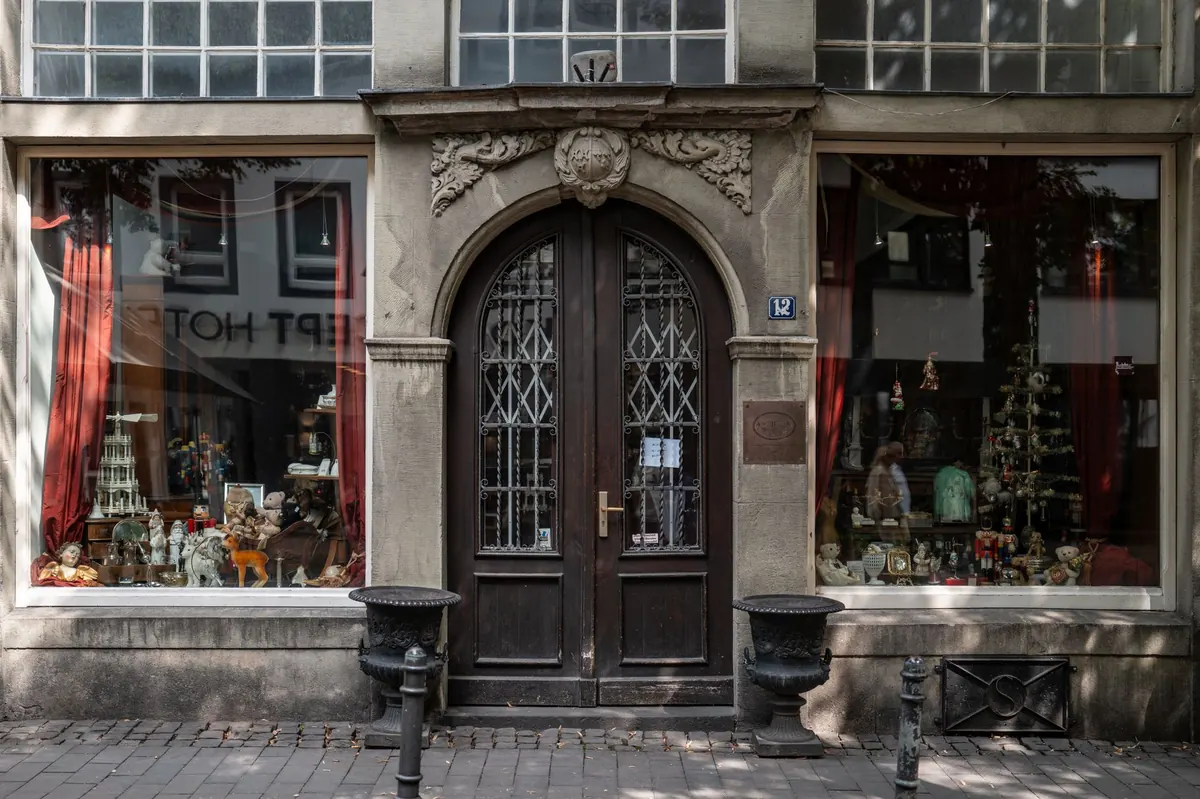
Photo: Surprising_Media / Pixabay